
Jeep Safaris in Ranthambore National Park: Private, Shared & Tatkal Booking Guide
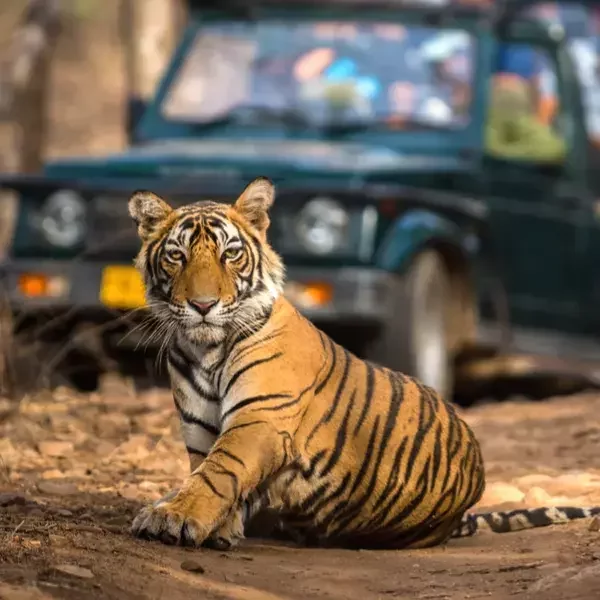
A wildlife safari in Ranthambore National Park is one of the highlights of a visit to Rajasthan. Famous for its Royal Bengal Tigers, beautiful lakes, ancient ruins and rugged forest landscapes, Ranthambore offers an opportunity to experience India's wildlife in its natural habitat.
However, planning a safari here requires a little understanding of the booking system. Unlike some other national parks in India, Ranthambore offers different ways of reserving a safari vehicle, including a private Jeep (Gypsy), a shared Jeep and a larger Canter. There are also different booking quotas, including advance reservations and the Tatkal system, which is particularly useful for travellers who have missed the regular booking window.
Understanding the Safari Zones in Ranthambore
Ranthambore is divided into ten safari zones, each offering a different landscape and wildlife experience.
The zones cover a combination of lakes, open grasslands, rocky hills, dry deciduous forests and buffer areas.
The choice of zone is often one of the most discussed aspects of planning a safari, particularly among visitors whose main objective is to see a Tiger.
Here is a brief overview.
Zones 1–5: The Core Safari Areas
These zones cover some of Ranthambore's best-known forest landscapes and water bodies.
Zone 1: Known for its forest tracks and areas around Singh Dwar, Sultanpur and other forest routes.
Zone 2: Offers a varied landscape, including forest tracks and water bodies. It is a popular choice for wildlife enthusiasts.
Zone 3: Particularly scenic, covering the famous Padam Talao and Rajbagh areas, with beautiful lake landscapes and historic ruins.
Zone 4: Includes Malik Talao and surrounding forest areas, offering a combination of water bodies and woodland.
Zone 5: Known for its varied terrain, including the Kachida and Bakola areas.
Zones 6–10: Buffer Safari Areas
These zones offer a different forest experience, with more open landscapes, rocky terrain and quieter stretches in certain areas.
Zone 6: Known for its open landscapes and the Kundal area.
Zone 7: Offers forest tracks and relatively less crowded routes at certain times.
Zone 8: Features a combination of forest and hilly landscapes.
Zone 9: Covers the Kuwal Ji area and riverine habitats.
Zone 10: Offers a quieter forest experience with a mixture of woodland and open tracks.
Which are the Best Zones of Tiger Sightings?
Zones 2, 3 and 4 are often among the first choices for visitors, particularly because of their established tiger territories, water bodies and scenic forest landscapes.
Zones 1 and 5 are also worth considering, while Zones 6–10 can offer rewarding wildlife experiences of their own.
However, it is important to understand that there is no permanently best zone for tiger sightings.
Tigers move freely within their territories, and their movements depend on several natural factors, including water availability, prey movement, temperature and territorial behaviour.
A zone that has recorded several tiger sightings in the preceding days may not necessarily offer the same experience on your safari.
Our recommendation is to remain flexible and not make your entire safari experience dependent on one particular zone. The forest, its wildlife and the experience of exploring it are equally important.
A note on zone selection: Zone availability and allocation depend on the booking category and the Forest Department's operating arrangements. A preferred zone should never be treated as guaranteed until it appears on the confirmed permit.
Understanding the Safari Vehicles in Ranthambore
The Forest Department permits two main types of vehicles inside Ranthambore National Park:
Gypsy (Jeep): An open-top, four-wheel-drive vehicle with seating for up to six visitors.
Canter: A larger, open-sided safari bus with seating for approximately 20 visitors. (we usually do not recommend this option)
Both vehicles are operated by authorised local operators under the supervision of the Forest Department. Private tourist vehicles, including privately hired SUVs, are not permitted inside the national park.
The Gypsy is generally the preferred option, particularly for couples, families, small groups and wildlife photographers. Its smaller size makes it easier to manoeuvre along the forest tracks, and the experience is considerably more intimate than travelling in a larger vehicle.
The Canter, on the other hand, is a more economical alternative for travellers who are comfortable sharing their safari with a larger group.
Private Jeep Safari (Exclusive Gypsy)
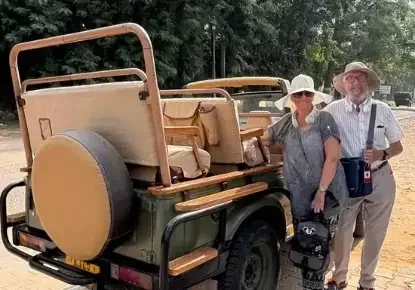
A private Jeep safari is the most recommended option for travellers looking for a more personalised wildlife experience.
As the name suggests, the entire Gypsy is reserved exclusively for your party. No other visitors are accommodated in the vehicle, even if your group consists of only two or four people.
A Gypsy accommodates up to six visitors, making it particularly suitable for couples, families or small groups of friends travelling together.
Advantages of booking a private Jeep:
Exclusive use of the vehicle: You will not be sharing the Jeep with other travellers.
A more comfortable experience: You can enjoy the safari with your own family or companions, without having to coordinate with strangers.
Better for photography: Having the entire vehicle to yourself makes it easier to position yourselves for wildlife photography and enjoy sightings without competing for space.
More flexibility within the permitted safari route: The smaller vehicle can navigate narrower forest tracks and manoeuvre more easily than a Canter.
A more intimate experience: You can enjoy the forest, wildlife and your naturalist's explanations at your own pace, within the regulations governing the safari.
How is a private Jeep booked?
A private Gypsy is booked by paying for all six seats, irrespective of the actual number of visitors travelling.
For example, if you are a couple, you will still need to pay for six seats to reserve the entire vehicle. The same applies to a family of four or a group of five.
Although this makes a private Jeep more expensive than a shared option, it is generally worth considering for travellers who value privacy, comfort and photography opportunities.
We particularly recommend a private Gypsy for couples on a special holiday, families travelling with children and wildlife enthusiasts who would prefer an exclusive vehicle.
Shared Jeep Safari
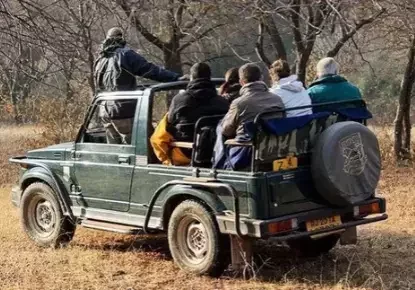
A shared Jeep safari is an excellent alternative for travellers who would like to experience the smaller Gypsy without paying for the entire vehicle.
Under this arrangement, you reserve individual seats rather than the complete vehicle. The remaining seats are allocated to other visitors, and you share the Jeep with them during the safari.
For instance, if you are travelling as a couple, you can reserve two seats, with the remaining seats allocated to other guests.
Advantages of a shared Jeep:
More economical than reserving an entire Gypsy.
The same smaller vehicle experience as a private Jeep.
Suitable for solo travellers and couples.
An opportunity to meet other wildlife enthusiasts.
The main consideration is that you will be sharing the vehicle with people you may not know. This can mean accommodating different photography interests and preferences during the safari.
It is also important to understand that a shared Gypsy is not a separate type of vehicle. It is the same authorised open-top Jeep, with the difference being how the seats are allocated and booked.
Is a shared Jeep a good option?
Absolutely. If you are travelling as a couple or individually and would prefer not to pay for six seats, a shared Gypsy is a sensible choice.
However, if you are a group of four to six people, we would generally recommend booking the entire vehicle rather than sharing it with other visitors.
When Do Ranthambore Safaris Open for Booking?
Ranthambore safaris are in considerable demand, particularly during the winter months, festive periods and school holidays.
The Forest Department releases safari permits through its official online booking system. There are different booking windows, depending on the type of reservation.
Advance bookings are generally available up to 90 days before the safari date. Under the current booking arrangements, advance reservations open at 12:00 noon (Indian Standard Time), and bookings are processed on a per-seat basis.
This means that travellers can reserve either individual seats in a shared Gypsy or Canter, or all six seats in a Gypsy for an exclusive safari.
For popular dates, particularly between October and March, we strongly recommend booking as soon as the relevant dates become available.
There is also a limited current-day booking facility.
Morning safaris need to be booked at least one day before the visit.
Afternoon safaris may be booked on the same day, subject to availability, after 10:00 AM IST.
This is not an option we would recommend relying upon when planning an international holiday, as availability can be extremely limited.
The Forest Department may announce changes to booking arrangements and release schedules. The advance booking calendar and availability displayed on the official portal should always be checked before making travel arrangements.
Tatkal Safari Booking in Ranthambore
One of the most useful features of Ranthambore's booking system is the Tatkal quota.
Tatkal bookings are intended for visitors who have missed the regular advance booking window or have been unable to secure a safari permit through the standard quota.
However, it is important to understand that Tatkal does not mean that a safari can be guaranteed at short notice. These permits are limited and are issued strictly subject to availability.
Under the current booking arrangements, the Tatkal quota opens seven days before the safari date.
The booking window opens at:
11:00 AM IST, seven days before the safari.
There are a few important points to understand:
Tatkal is available for a full Gypsy reservation, rather than individual seats.
You need to reserve all six seats, even if fewer people are travelling.
Tatkal bookings attract a premium over the regular safari charges.
The availability is limited and permits are issued on a first-come, first-served basis.
The zone is subject to the availability and allocation displayed by the Forest Department.
For example, if you wish to undertake a safari on 20 December the Tatkal booking window is scheduled to open at 11:00 AM IST on 13 December.
No. The regular Tatkal quota is intended for exclusive Private Gypsy reservations.
We generally recommend treating Tatkal as a second opportunity rather than the primary booking method.
If you are travelling to Ranthambore as part of a longer holiday in India, it is always better to secure your safaris in advance. Tatkal can be useful when regular permits are sold out, but it is expensive than the usual safari as it comes with a premium fees.
Important Things to Remember Before your Safari
A few practical considerations can make your Ranthambore experience considerably smoother.
Identification documents: Every visitor must provide accurate personal details and the required identification documents at the time of booking. International visitors should use their passport details.
Original identification: Carry the original identification document used for the booking. The details must match the safari permit.
Non-refundable permits: Safari permits are subject to the Forest Department's cancellation and refund regulations. Do not assume that a permit can be cancelled or amended without a charge.
Reporting time: Guests must reach the designated boarding point well before the safari departure time. The exact reporting location depends on the allocated zone.
Safari timings: Morning and afternoon departure timings change according to the season. The confirmed timings should be checked on the permit.
Photography: A camera with a suitable zoom lens is useful. Mobile phone use is restricted in tourism zones of the core habitat, so visitors should follow the latest Forest Department instructions.
Responsible wildlife viewing: Maintaining silence, following the naturalist's instructions and respecting the animals' space are essential parts of a responsible safari.
At Indus Bound, we understand that arranging a wildlife safari in India involves more than simply booking a vehicle.
The choice between a private and shared Jeep, the availability of preferred safari dates, the selection of zones and the timing of the booking releases all need to be considered when planning your itinerary.
We assist our guests with arranging Ranthambore safaris as part of their tailor-made India holidays, taking into account their interests, group size, travel dates and overall itinerary.
Wherever possible, we recommend securing the safari permits well in advance, particularly for travellers visiting during the busy winter season.
For guests who have missed the regular booking window, we can also advise on the available Tatkal and Premium Tatkal options, subject to the applicable Forest Department rules and availability.
Our objective is to ensure that your time in Ranthambore is well planned, allowing you to enjoy the experience of exploring one of India's most celebrated tiger reserves without unnecessary complications.
Start Planning Your Journey
Every itinerary we create is tailored entirely around you.
Share your travel ideas with our specialists, and we'll design a bespoke journey with personalised recommendations, handpicked stays, and a transparent quotation.